Climate Change Looks Different to Different People
A study led by a researcher at Karl Landsteiner University shows how social position, place of residence and personal experience shape older people’s views of extreme weather.
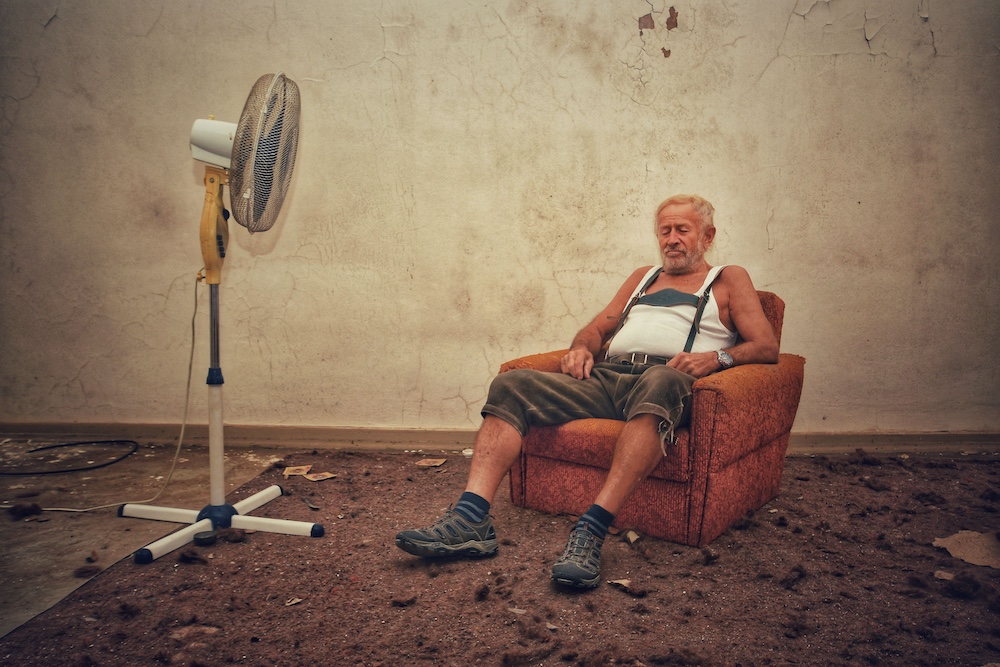 Copyright Perry Wunderlich_via Pexels
(firmenpresse) - Krems, Austria, 23 June 2026 – Older people in Austria widely perceive an increase in extreme weather since their childhood. Yet how strongly they notice these changes depends on their social position, where they live and how they relate to environmental issues. A new study led by Karl Landsteiner University (KL Krems) shows that environmental awareness, urban or rural residence, education and financial strain are all linked to how people aged 50 and above perceive extreme weather. The study examined perceived changes in the frequency and intensity of heat, drought, storms, rainfall and flooding, as well as changes in snow cover. Based on Austrian data from a European survey, the study shows that climate change is not only measured in temperatures and weather records. It is also interpreted through social position, everyday surroundings and personal experience.
Older adults matter to climate research for several reasons. They are vulnerable to heatwaves, floods, storms and other climate-related hazards, and they carry long memories of changing seasons and local environments. Yet they are not merely passive victims: as their share of society grows, their housing needs, mobility, consumption and everyday behaviour become increasingly relevant for climate policy, while their knowledge, experience and social capital may support adaptation. A joint study by KL Krems and the University of Applied Sciences St. Pölten therefore investigated older people’s perceptions of extreme weather — and which social factors shape them.
Not Just the Weather
“Older people do not experience climate change in a social vacuum,” says Jasmin Riederer from the Competence Center for Gerontology and Health Research at KL Krems. “Our results show that perceptions of extreme weather are strongly shaped by environmental awareness, living environment and socio-economic factors. That matters if climate communication and adaptation measures are meant to reach people effectively.”
The analysis is based on Austrian data from the Survey of Health, Ageing and Retirement in Europe (SHARE). Responses from 3,170 people aged 50 and above were used for regression models to examine which social factors were associated with stronger perceptions of extreme weather. Most respondents perceived increases in the frequency or intensity of several weather phenomena since childhood, especially hot days, droughts, storms and average temperatures. The most striking result concerned snow: 91.1 percent reported a decline in continuous snow cover, with 61 percent perceiving a substantial decline. Yet this broad awareness was only part of the picture. The strongest predictor was environmental awareness, although the study cannot determine whether awareness shapes perception or perceived changes strengthen awareness.
Urbanicity also played a role. Older people living in big cities perceived stronger increases in extreme weather than those living in large towns, small towns or rural areas. One possible explanation is that urban environments make certain climate effects, especially heat, more tangible through dense infrastructure and heat island effects. By contrast, rural residents may interpret weather fluctuations more often as part of long-term seasonal variability.
Social Filters
Education and financial strain added further layers. Respondents with higher education perceived stronger increases in weather extremes than those with lower education. Severe financial difficulty was also associated with stronger perceptions; moderate difficulty, by contrast, showed no significant difference from financial security. In contrast, subjective health and loneliness showed no significant association — a result that challenges previous assumptions. “These differences show why climate communication cannot be one-size-fits-all,” says Lukas Richter of St. Pölten University of Applied Sciences and Vienna University of Economics and Business. “Older people interpret environmental change through their daily surroundings, their social situation and the information available to them. Adaptation strategies need to take these differences seriously.”
The findings contribute to the emerging field of climate gerontology, which studies the intersection of population ageing and climate change. For Austria, they suggest that older adults should be addressed not only as a vulnerable group, but also as citizens whose experience, perceptions and choices matter for climate adaptation. Turning awareness into action will require climate-resilient housing, accessible information, strong local networks and communication that reflects social differences. With its Competence Center for Gerontology and Health Research, KL Krems contributes expertise at the intersection of ageing, health, society and environmental change.
Original publication: Perceived changes in extreme weather among older people – insights from Austria, J: Riederer; L: Richter, Front. Psychol. 17:1794515, doi: 10.3389/fpsyg.2026.1794515.
Themen in dieser Pressemitteilung:
Unternehmensinformation / Kurzprofil:
Karl Landsteiner University (06/2026)
The Karl Landsteiner University (KL Krems) is an internationally recognized educational and research institution located on the Campus Krems. KL Krems offers modern, demand-oriented education and continuing education in medicine and psychology as well as a PhD programme in Mental Health and Neuroscience. The flexible educational programme is tailored to the needs of students, the requirements of the labour market and the challenges of science. The three university hospitals in Krems, St. Pölten and Tulln and the MedAustron Ion Therapy and Research Centre in Wiener Neustadt guarantee clinical teaching and research of the highest quality. In its research, KL Krems focuses on interdisciplinary fields with high relevance to health policy – including mental health and neuroscience, molecular oncology as well as the topic of water quality and the associated health aspects. KL Krems was founded in 2013 and accredited by the Austrian Agency for Quality Assurance and Accreditation (AQ Austria). https://www.kl.ac.at/en
Scientific Contact
Jasmin Riederer, MSc.
Karl Landsteiner University
Department of Gerontology and Health Research
Dr.-Karl-Dorrek-Straße 30
3500 Krems / Austria
T +43 2732 720 90 459
E jasmin.riederer(at)kl.ac.at
W https://www.kl.ac.at/
Copy Editing & Distribution
PR&D – Public Relations for Research & Education
Dr. Barbara Bauder-Jelitto
Kollersteig 68
3400 Klosterneuburg / Austria
M +43 664 1576 350
E bauder(at)prd.at
L https://www.linkedin.com/company/prd-public-relations-für-forschung-bildung
W https://www.prd.at


Datum: 23.06.2026 - 11:12 Uhr
Sprache: Deutsch
News-ID 738298
Anzahl Zeichen: 5334
contact information:
Contact person: Dr. Till C. Jelitto
Town:
Klosterneuburg, Austria
Kategorie:
Healthcare & Medical
Typ of Press Release: Success
type of sending: don't
Date of sending: 23.06.2026
Diese Pressemitteilung wurde bisher 130 mal aufgerufen.
Die Pressemitteilung mit dem Titel:
"Climate Change Looks Different to Different People"
steht unter der journalistisch-redaktionellen Verantwortung von
PR&D – Public Relations ?for Research & Education (Nachricht senden)
Beachten Sie bitte die weiteren Informationen zum Haftungsauschluß (gemäß TMG - TeleMedianGesetz) und dem Datenschutz (gemäß der DSGVO).


